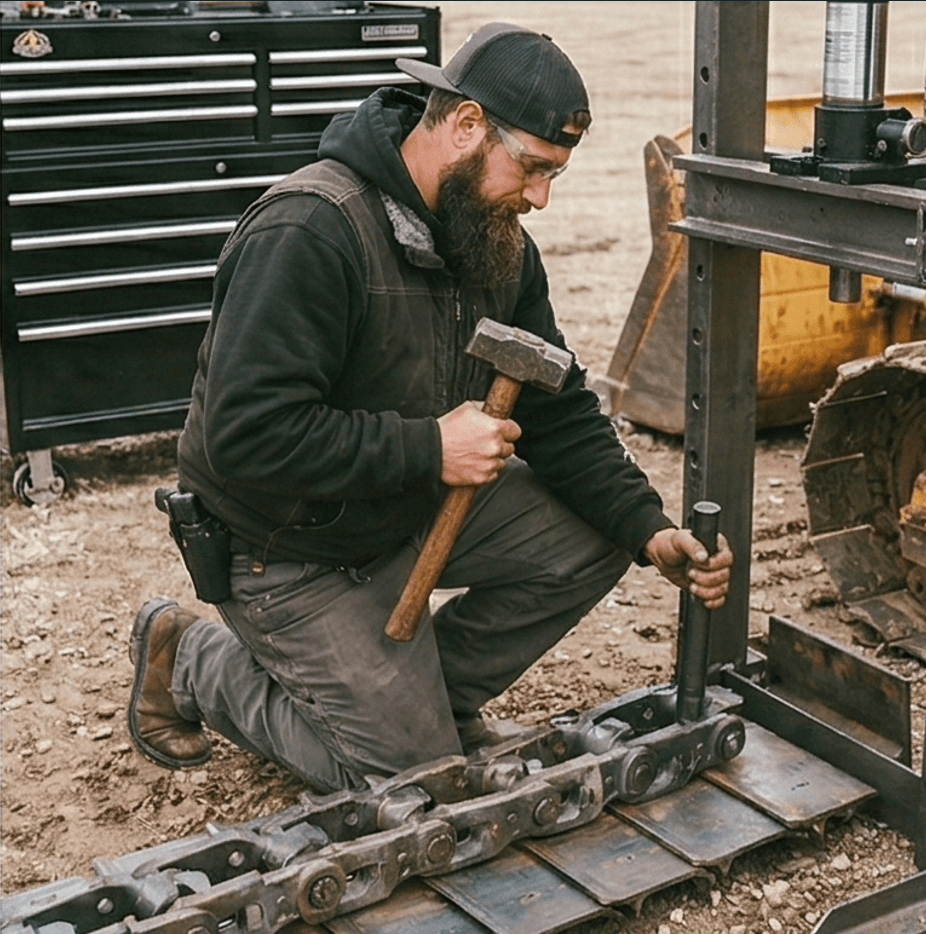
The "Big Three" in the Beehive State: Why Brand Choice Matters
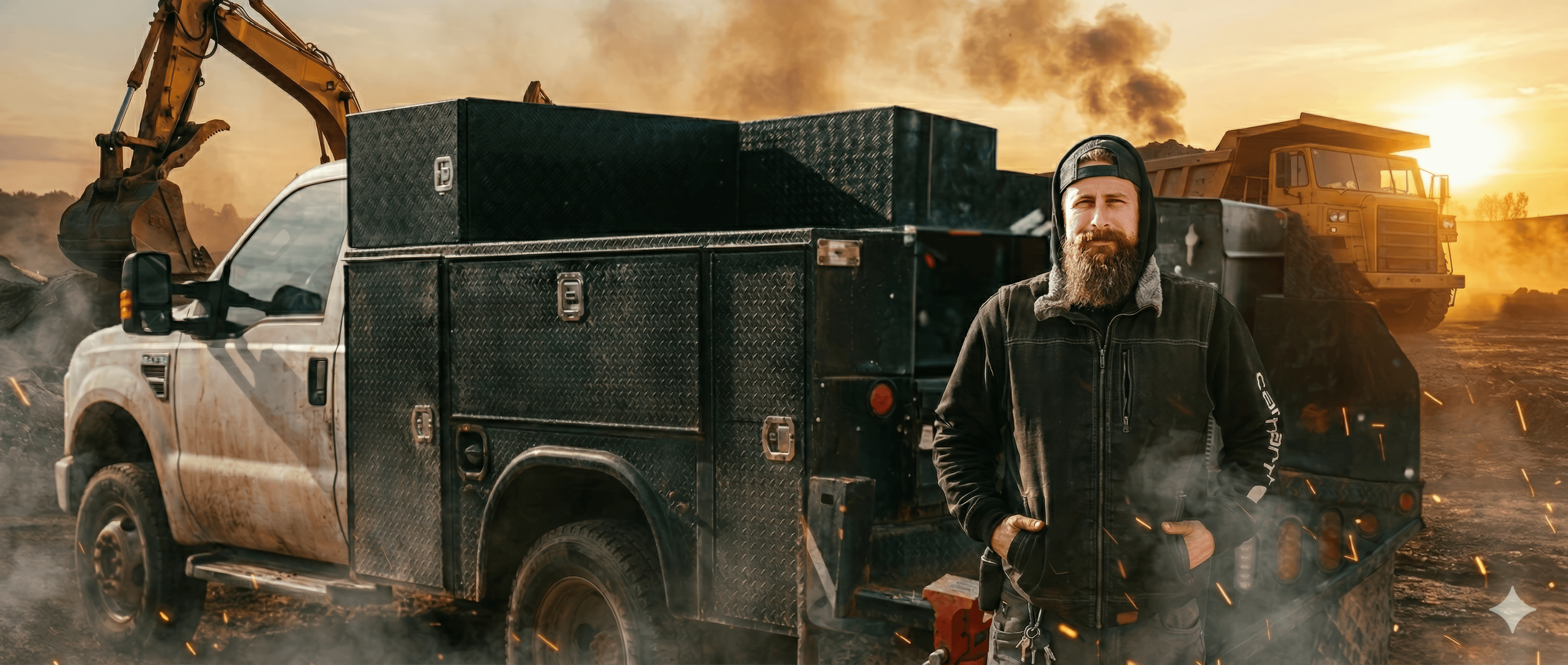
If you spend any time on a jobsite in Salt Lake, Utah County, or out in the Uintah Basin, you’re going to see three colors more than any others: Yellow (Cat), different Yellow (Komatsu), and Green (Deere). Every contractor has their favorite, and the loyalty is as deep as a Ford vs. Chevy debate at a truck stop. But as a mechanic who has to fix them all, I don't look at the paint—I look at the pins, the pumps, and the computers. In 2026, the gap between these brands in terms of raw capability has narrowed, but the gap in 'Serviceability' and 'Reliability' in Utah’s specific conditions is as wide as ever. Utah isn't kind to machines. We have high-alkali soil that eats through paint and seals, abrasive rock that destroys undercarriages, and temperature swings that make hydraulic systems cry.
Caterpillar is the undisputed heavyweight in our region, and for good reason. Their dealer network in Utah is massive. If you’re stuck in a remote part of the state, there’s a good chance a Cat parts counter is closer than anyone else’s. But Cat has also leaned hard into complexity. A modern 2026 Cat machine is essentially a computer with a bucket attached. When it works, it’s a productivity monster. When it doesn't, you better have a tech with a high-speed data connection. Komatsu, on the other hand, has stayed true to its 'integrated' philosophy. They build almost everything themselves—the engine, the pumps, the valves. This leads to a hydraulic 'feel' that many operators prefer. It’s smoother, more predictable, and in my experience, slightly more resistant to the internal 'cavitation' issues we see in high-altitude environments like ours.
Then there’s John Deere. For years, Deere was seen as a 'construction light' brand by some of the old-timers, but they have completely erased that reputation in the last decade. Their mid-size excavators and loaders are some of the most reliable pieces of iron on the market today. They’ve focused heavily on operator comfort and 'daily serviceability'—meaning they make it easier for your crew to actually do the grease and oil checks I’m always nagging you about. If a machine is easier to service, it *gets* serviced, and therefore it lasts longer. It’s a simple equation that Deere has mastered. In this comparison, we’re going to look at the 'Total Cost of Ownership' for these three brands in the Utah market, focusing on the real-world maintenance issues we see every day in the field.
I want to be clear: there is no 'bad' machine in this group. You can’t reach this level of market share by building junk. But there is a 'right' machine for your specific job. If you’re doing heavy mountain rock work, you might want the brute force of a Cat. If you’re doing high-precision utility work in the city, the finesse of a Komatsu might be your best bet. And if you’re managing a fleet of versatile mid-size units, Deere’s support and comfort might win out. Let’s dive into the guts of these machines and see where the real differences lie when the dirt starts flying and the hours start stacking up.
Caterpillar: The Heavyweight King and the Parts Powerhouse
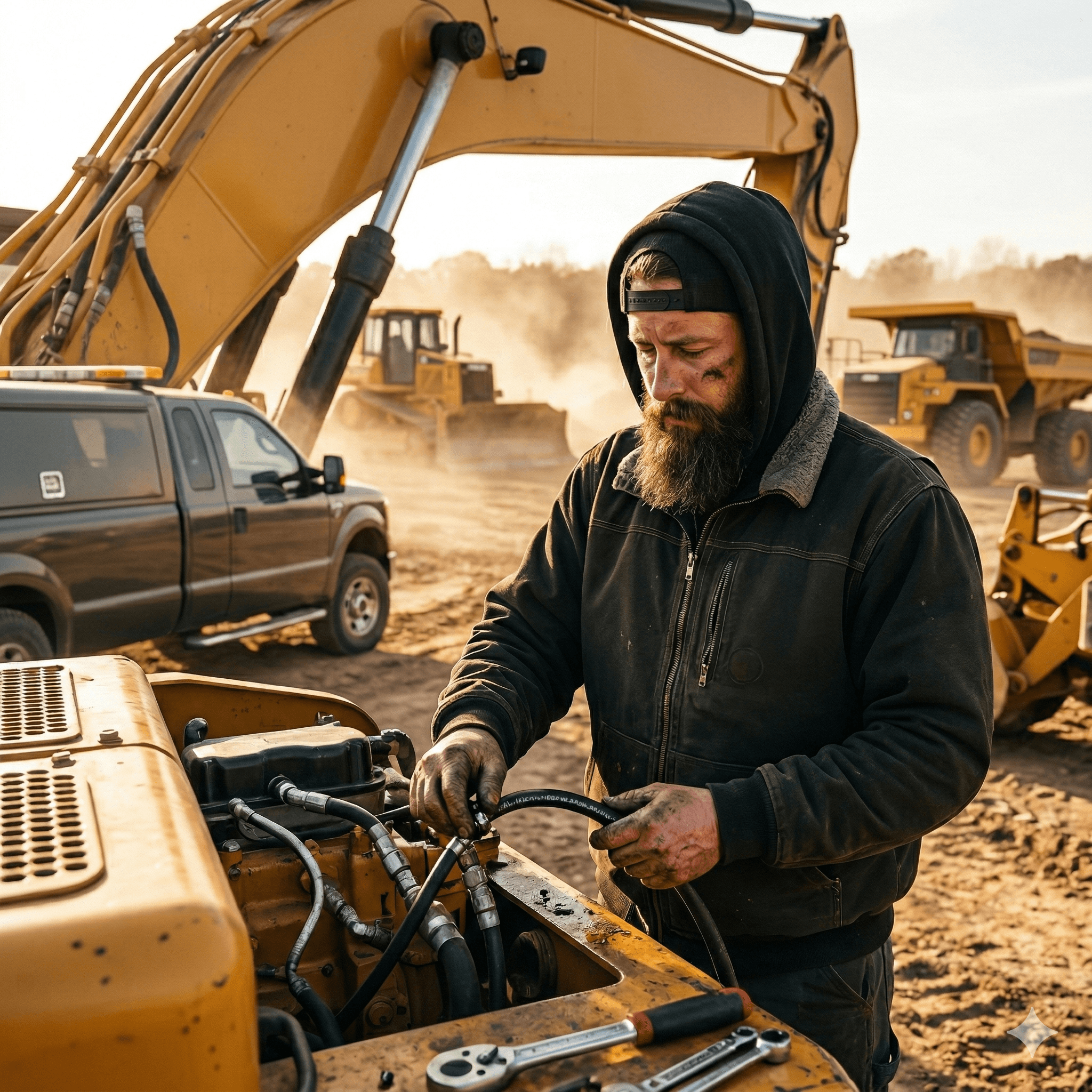
Let’s talk about the 800-pound gorilla first. Caterpillar (Cat) is the gold standard for a reason. Their 'Product Support' is the best in the world, period. In Utah, this means that even for a 20-year-old machine, I can usually get a part by 7 AM the next morning if I order it by 5 PM today. For a contractor, that parts availability is a form of insurance. You might pay a premium for the machine and the parts, but you’re paying for the certainty that your downtime will be shorter. Cat’s resale value also stays higher than almost anyone else. It’s the closest thing to a 'safe' investment in the heavy equipment world. If you decide to trade in three years, that Cat name is going to get you a better deal at the auction.
However, as a mechanic, I have a love-hate relationship with modern Cat iron. Their 'integration' is all electronic. Everything talks to everything else over a complex CAN-bus network. This is great for telematics and remote diagnostics (which we love!), but it means that a simple broken wire can shut down an entire machine. We see a lot of 'ghost codes' in Cat machines where a sensor is perfectly fine, but the connection has been compromised by Utah’s fine dust or vibration. Also, Cat parts are expensive. You’re paying for that dealer network with every filter and seal. If you aren't doing the volume of work to justify that premium, your profit margins can get squeezed by the maintenance costs.
In Utah’s rock, Cat’s undercarriages are legendary. Their 'Sleeve Bearing' and 'SystemOne' tracks are designed to handle the abrasive silica and granite we have in the northern part of the state. If you’re working in the mines or on big highway projects, Cat’s heavy-duty frames and structures are still the toughest in the business. They take a beating and keep their alignment. But remember: a tough machine still needs a tender touch when it comes to the fuel system. Cat’s ACERT and latest Tier 4/5 engines are extremely sensitive to fuel quality. If you’re running dirty diesel out of a farm tank, a Cat will be the first one to complain and the most expensive one to fix. High tech requires high standards.
Bottom line on Cat: Buy it if you need the highest possible uptime and you have the work to justify the higher 'life-cycle' cost. Use their telematics, stay on top of their specific service intervals, and enjoy the best resale value in the industry. But don't expect to fix a 2026 Cat with a crescent wrench and a screwdriver. You’re investing with a high-tech powerhouse, and you need to treat it as such. We provide mobile support for Cat fleets across Utah, bringing the diagnostic laptops to your site so you don't have to pay the dealer's 'travel-to-the-moon' rates. We’ll help you keep that yellow iron making money.
Komatsu: The Hydraulic Surgeon of the Industry
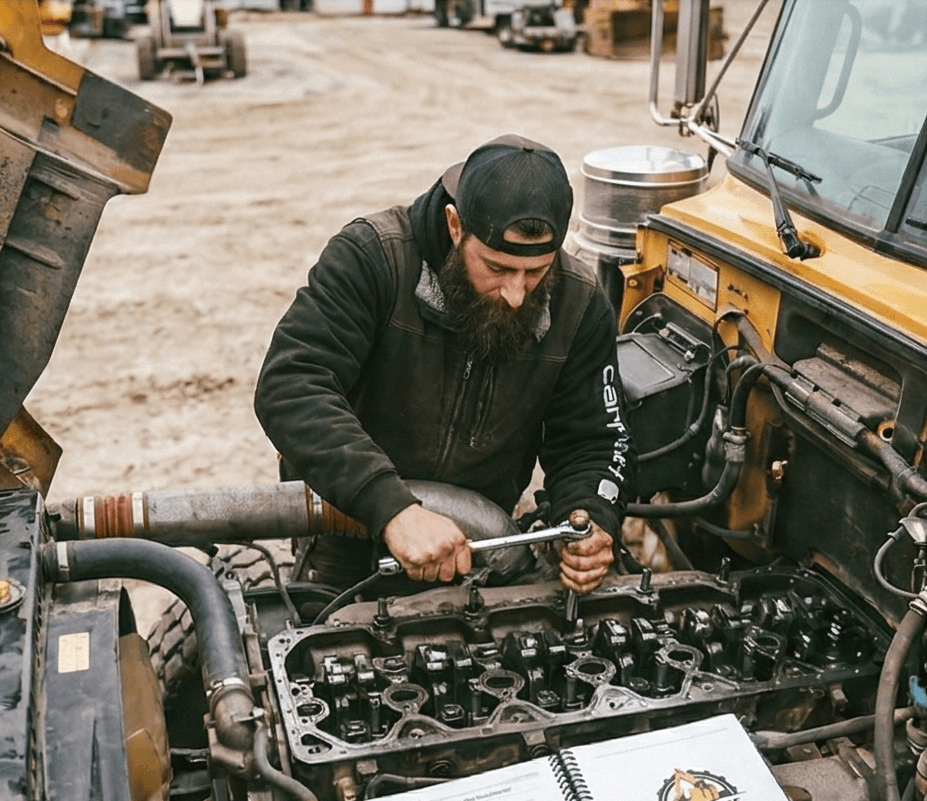
If Caterpillar is a hammer, Komatsu is a scalpel. There is a specific 'feel' to a Komatsu excavator that is hard to describe until you’ve run one. Their hydraulic systems are incredibly refined. Because they design and build their own pumps and valves to work specifically with their own engines, the harmony of the machine is world-class. In Utah, where we do a lot of precision trenching for utilities and fiber optics, Komatsu has a huge following. Their 'Closed-center Load Sensing' (CLSS) system means the machine only gives you exactly the flow and pressure you need for the task at hand. This leads to better fuel efficiency and, in my experience, less heat generated in the hydraulic tank during long shifts.
From a maintenance perspective, Komatsu machines are often 'cleaner' in their layout. They don't have as much 'clutter' under the hood as some of the American brands. This makes it easier for a mobile mechanic to get in there and actually fix things without having to remove five other components first. We see fewer 'leaks' on Komatsus because they use high-quality O-ring face seals and robust hose routing that resists rubbing. However, Komatsu’s dealer network in Utah, while good, isn't as dense as Cat’s. If you’re out in a remote corner of the state, you might be waiting an extra day for a specialized part. This is the trade-off for that precision engineering.
One area where Komatsu has really stepped up is in their 'Intelligent Machine Control' (iMC). They were early to the game with factory-integrated GPS and 3D grading. Unlike some 'bolt-on' systems, Komatsu’s iMC is baked into the hydraulic controllers. This means the machine can actually 'prevent' the operator from over-digging, which is a massive productivity boost on Utah’s hilly terrain. But—and this is a big one—that tech is sensitive. We’ve seen iMC sensors get damaged by flying rock or improper cleaning. If you’re running a 'Tech-Heavy' Komatsu, you need to make sure your operators are trained to respect the sensors as much as the steel.
Bottom line on Komatsu: Buy it if you value precision, fuel efficiency, and a refined operator experience. It’s the perfect machine for the contractor who takes pride in 'clean' work and wants a machine that feels like an extension of the operator’s hands. Just make sure you have a reliable service outfit (like us!) who knows the nuances of Japanese hydraulic logic. We’ve spent years decoding Komatsu systems, and we can help you keep that precision edge sharp. Komatsu is a 'pro's' machine, and it deserves pro-level maintenance.
John Deere: The Operator’s Choice and the Support Star
John Deere (often working with Hitachi on their excavator designs) has a massive footprint in Utah. Why? Because they understand the 'Daily Life' of a contractor better than almost anyone. A Deere machine is designed around the person in the seat and the person with the grease gun. Their cabs are widely considered the best in the business—quiet, ergonomic, and with AC that can actually keep up with a 105-degree day in St. George. If your operators are happy, they’re more productive and they take better care of the equipment. Deere has turned 'comfort' into a reliability strategy, and it’s working.
As a mechanic, I love Deere’s 'Serviceability.' Most of their daily check points are grouped together behind a single, easy-to-reach door. They use clear labeling and standardized components that make my life a lot easier. If I’m doing a mobile field service on a Deere, I can usually get the job done 15-20% faster than on a comparable Cat or Komatsu just because of the layout. Deere also has a very strong 'Reman' (remanufactured) parts program. If you need a new starter, alternator, or even an engine, their reman options are high-quality and often half the price of a 'new' Cat part. This makes the long-term TCO of a Deere very attractive to mid-size fleet owners.
In Utah’s conditions, we do see some specific Deere issues. Their 'swing motors' and 'final drives' on older mid-size excavators used to be a weak point, though they’ve largely addressed this in the newer 'G' and 'P' series. Also, Deere’s electronics, while robust, can be a bit 'finicky' when it comes to software updates. You’ll sometimes get a 'nuisance' code that doesn't affect performance but won't go away without a dealer reset. But overall, a Deere is a 'workhorse' machine. It’s not as flashy as a Komatsu or as 'heavy' as a Cat, but it shows up every day and does the job without drama. It’s the 'steady Eddie' of the Utah construction scene.
Bottom line on John Deere: Buy it if you’re a mid-size contractor who wants a versatile, operator-friendly fleet with excellent local support and manageable parts costs. It’s the best 'all-around' choice for a company that does a mix of residential, commercial, and light infrastructure work. We love working on Deere iron because it’s logical and well-supported. Whether you’ve got a fleet of Deere skid steers or a few 350 excavators, we’ll help you keep them in peak condition. Deere is built for the long haul, and we’re here to make sure you get every hour out of it that the factory promised.
The Final Verdict: Which One Wins in Utah?
So, which one should you buy? In 2026, the answer isn't on the spec sheet—it’s in the 'Support Loop.' In Utah, a brand is only as good as the service you can get for it. If you have a great relationship with your local Cat dealer and their tech is five minutes away, buy Cat. If you’re a 'Deere guy' and you love the local service manager, stay Green. But if you’re looking to break away from the 'Dealer Trap' and want to run a multi-brand fleet without the multi-brand headaches, that’s where we come in. Iron Horse Field Service is the 'Great Equalizer.' We provide expert mobile service for all three of these brands, using the same high-level diagnostics the dealers use, but with the speed and personal touch of an field service.
If you’re working in the Salt Lake Valley, you have the luxury of choice. But if you’re out in the rural counties, parts availability becomes your #1 priority, which usually favors Cat. If you’re doing high-density urban work with tight footprints and precision requirements, Komatsu’s finesse is hard to beat. And if you’re focused on operator retention and versatile fleet management, Deere is your strongest play. Don't listen to the 'Brand Fanatics' on the internet; listen to your own data. Track your downtime, track your repair costs, and track your operator feedback. That’s the only 'spec' that matters.
In conclusion, the 'Big Three' all build incredible machines. Caterpillar offers the best resale and parts network; Komatsu offers the best hydraulics and precision; John Deere offers the best operator experience and serviceability. In the harsh environment of the Beehive State, any of them can succeed if they’re maintained properly. If you want a professional, unbiased 'Fleet Health Audit' to see which brand is actually performing best for *your* company—or if you need a reliable mobile mechanic who knows how to fix all three—give us a call at Iron Horse Field Service. We serve the Wasatch Front and beyond, bringing the expertise to your site. Let’s keep that iron moving, regardless of the color. Give us a shout today!
Need repair help fast?
Tell us your equipment details, jobsite location, and symptoms. We’ll follow up to confirm scheduling and dispatch service.