When should you repair vs. replace heavy equipment in 2026?
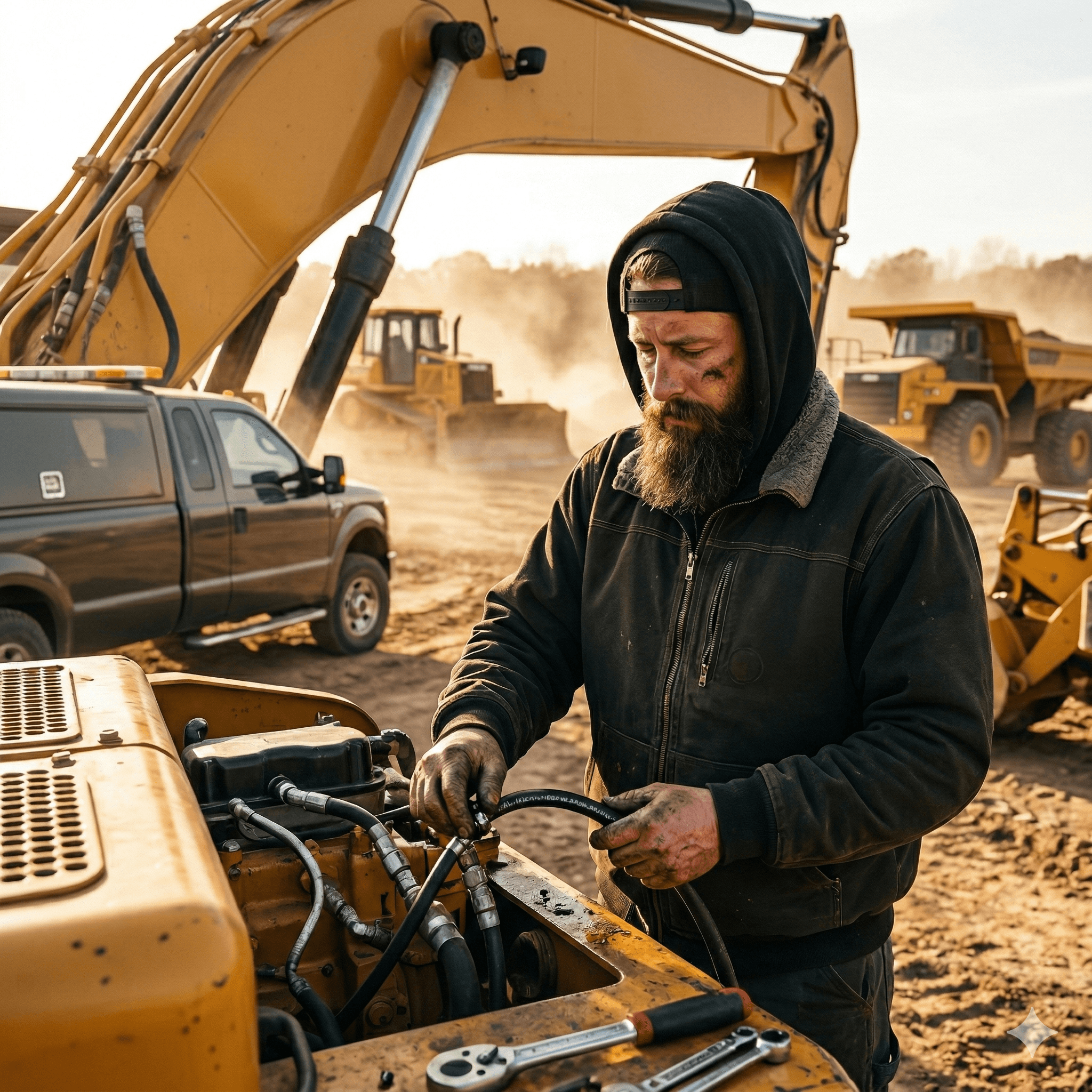
The decision to repair or replace heavy equipment in 2026 depends on the machine’s Cost per Hour, current technology parity, and replacement lead times. If a single repair exceeds 50% of the machine's value, or if downtime is costing more in 'shadow costs' than a new payment, replacement is often the better move. If you’re still using the old '50% rule'—where you trade a machine in as soon as a single repair costs 50% of its current value—you’re probably leaving a lot of money on the table, or worse, you’re setting yourself up for a massive fleet shortage. The world of heavy equipment has changed more in the last three years than it did in the previous twenty.
We also have to talk about the technology gap. A machine built in 2012 is a completely different animal than one built in 2024. The newer rigs have integrated grade control, remote telematics that actually work, and fuel efficiency numbers that make the old stuff look like it’s got a hole in the tank. But that technology comes with a price—not just the sticker price, but the complexity price. When a 2026 model throws a code, you need a laptop and a specialist. When your 2010 model has an issue, you can usually figure it out with a test light and a pressure gauge. This is creating a 'two-tier' fleet reality in Salt Lake City and Ogden where some contractors are clinging to their 'dumb' iron because they can fix it themselves, while others are jumping headfirst into the high-tech world to gain an edge on productivity.
I often tell my students that a machine has three different 'lives.' There’s the physical life (how long before the frame snaps), the mechanical life (how long before the engine and pumps are shot), and the economic life (how long before it costs more to keep than to replace). In Utah’s abrasive conditions, these three lives rarely end at the same time. I’ve seen dozers out in the mines that look like they’ve been through a war, but their economic life is still strong because they’re paid for and the repair costs are manageable. On the other hand, I’ve seen three-year-old skid steers that are economic disasters because they’re being used in applications they weren't built for, and the constant downtime is eating the owner alive. You have to be able to separate your emotional attachment to a machine from the cold, hard numbers on your P&L statement. That machine isn't your friend; it’s a tool, and if it’s a dull tool, it’s time to sharpen it or get a new one. For a deeper look at seasonal impacts on costs, see our summer maintenance guide.
In this guide, we’re going to throw out the generic spreadsheets and look at the real-world variables that matter to Utah contractors right now. We’re going to talk about the 'hidden' costs of keeping old iron, the 'unseen' benefits of new tech, and how to build a decision matrix that actually works when you’re standing in the mud looking at a leaking final drive. My goal is to give you the confidence to say 'fix it' or 'dump it' without having to guess. Because in 2026, guessing is the most expensive thing you can do. Let’s look at the math of repair first, because that’s where most people start—and where most people get it wrong. It’s about more than just the invoice from the mechanic; it’s about the ripple effect that breakdown has on your entire operation.
How do you calculate the true cost of heavy equipment downtime?
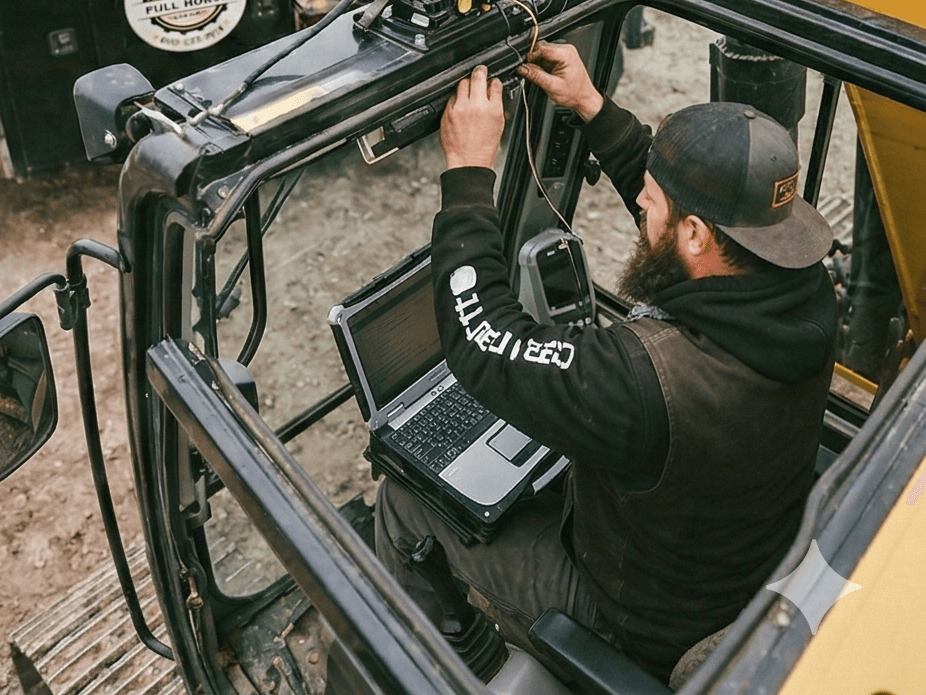
The true cost of heavy equipment downtime includes crew idle time, rental replacement fees, and project schedule penalties, which typically account for 70% of the total breakdown expense. The 'visible' repair bill is usually only the tip of the iceberg. As an SEO and a teacher, I like to look at the 'data' behind that bill. If that $12,000 repair gives you another 3,000 hours of trouble-free production, you’re essentially 'buying' those hours for $4 an hour. Compare that to the $45 or $50 an hour you’d be paying in principal and interest on a new machine.
But here’s the kicker: the 'shadow costs' are what show up in your bank balance at the end of the year. We’re talking about crew idle time—five guys at $40/hour standing around for half a day is $800. We’re talking about the rental replacement—$500 a day plus mobilization. We’re talking about the schedule slip—if you miss a milestone and get hit with a liquidated damages penalty, that 'small' hydraulic repair just cost you $10,000. When you add all that up, the decision to 'keep fixing' an unreliable machine starts to look like a slow-motion suicide for your business. An old machine that breaks once a year is a bargain. An old machine that breaks once a month is a cancer. Often, these frequent failures are linked to poor operator habits that accelerate wear.
I worked with a contractor in Tooele who was obsessed with 'zero debt.' He ran his loaders until they literally fell apart. He thought he was being smart because he didn't have any monthly payments. But when we actually tracked his downtime, we found that his 'free' loaders were costing him more in lost production and emergency repairs than a fleet of brand-new machines would have cost in payments. He was so focused on the 'outflow' of cash that he didn't see the 'lost inflow' of revenue. This is the 'Debt vs. Downtime' trap. In 2026, with the cost of labor being what it is, you cannot afford to have people sitting idle. Reliability is a form of currency. If your repair plan doesn't include a 'reliability audit,' you’re missing the most important variable in the equation.
So, how do you track this? You need a 'Breakdown Log' for every machine. Don't just track the cost of the parts; track the hours the machine was unavailable for work. Track the reason for the failure. If you see the same machine appearing in the log three times in a quarter for different issues, that machine is telling you its 'mechanical life' is ending. It’s entering the 'wear-out' phase of the bathtub curve, where multiple components are failing due to cumulative fatigue. This is the 'Death by a Thousand Cuts' scenario. You fix the starter, then the alternator goes. You fix the hose, then the pump seals let go. At that point, you aren't repairing a machine; you’re just performing CPR on a ghost. Knowing when to stop the resuscitation is the mark of a great fleet manager.
The Replacement Equation: Lead Times, Tech, and Resale
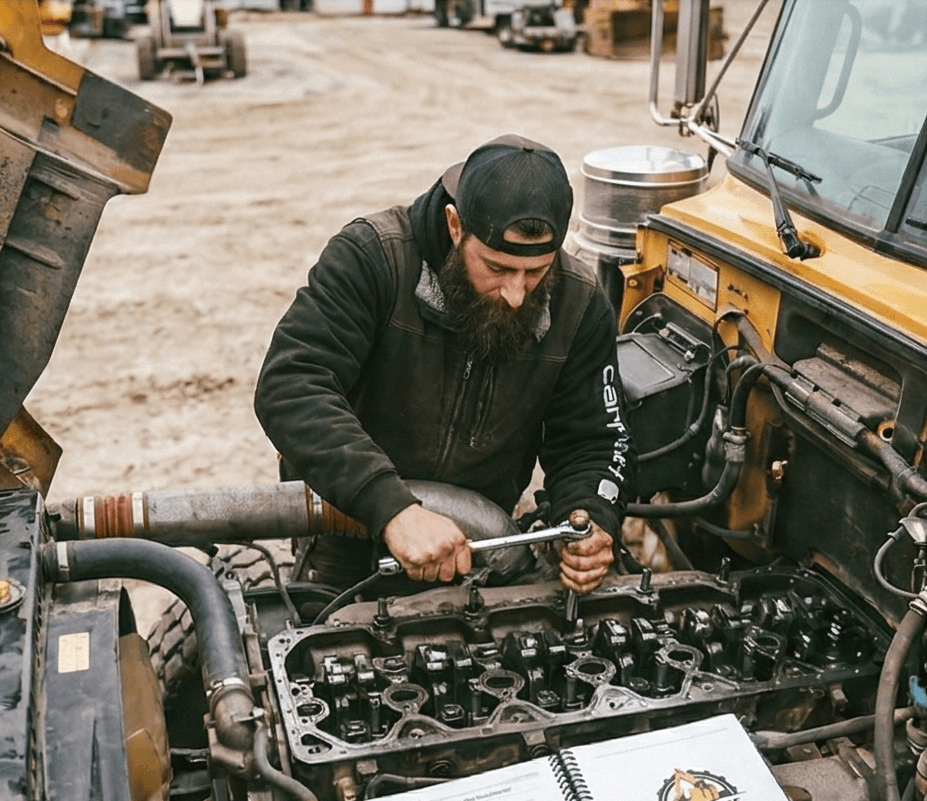
Now let’s look at the other side: buying new. In the 'good old days,' you’d call your dealer, pick a color, and the machine would be on your site by Friday. In 2026, that’s a fantasy. Replacing a machine today requires a 'Lead Time Buffer.' I’ve had customers tell me they decided to replace a machine, only to realize that by the time the new one arrives, they’ll have to sink another $20,000 into the old one just to keep it moving until delivery. This 'bridge repair' cost is a real part of the replacement equation. If you’re planning to trade a machine at 8,000 hours, you better start shopping at 6,500 hours. If you wait until 8,000, you’re going to end up running it to 10,000 while you wait for the manufacturer to ship the new unit.
Then there’s the 'Technology Premium.' A new 2026 excavator is likely 15-20% more productivity than a 2016 model. It moves more dirt per gallon of fuel, and it has automated features that make a mediocre operator look like a superstar. How do you value that? If a new machine saves you $1,000 a month in fuel and gets the job done two days faster, that’s $2,000 or $3,000 a month in 'found' money. Over a five-year loan, that pays for a huge chunk of the machine. Many of these advances are detailed in our 2026 tech trends guide. But—and this is a big 'but'—you have to have the work to justify it. If your machine sits in the yard half the time, the tech premium is a waste of money. Tech pays off in high-utilization environments. If you’re running 2,000 hours a year, buy the new tech. If you’re running 400 hours a year, keep the old iron and maintain it well.
Don't ignore the 'Resale Cliff' either. There is a point in a machine's life where its value drops off a cliff. For a lot of compact equipment, it’s around the 3,000 to 4,000-hour mark. For larger iron, it might be 8,000 to 10,000 hours. If you sell just *before* that cliff, you get a premium trade-in that you can roll into the next unit. If you wait until *after* the cliff, you’re stuck with a machine that nobody wants to finance, and you’ll be lucky to get scrap value for it. I see guys in Utah County all the time who hold on just one year too long and lose $15,000 in equity. They thought they were 'saving' money by not trading, but the market took more than the payments would have. You have to watch the auction results and the used market like a hawk. Your dealer isn't going to tell you when you’ve hit the cliff; they want you to keep paying for service!
Lastly, consider the 'Operator Retention' factor. It sounds soft, but in a tight labor market, it’s hard math. Good operators want to work in nice cabs with working AC, comfortable seats, and responsive controls. If you ask a top-tier operator to run a clunker that beats them up all day, they’re going to look for a job with the guy down the street who has a newer fleet. Losing a lead operator can cost you more than a new dozer payment in terms of lost production and training costs for a replacement. Your fleet is your best recruiting tool. When you’re weighing repair vs. replace, don't just look at the metal—look at the person sitting in the seat. Are you giving them the tools to succeed, or are you giving them a reason to leave? In 2026, the 'human' side of the equation is often the deciding factor.
A Step-by-Step Decision Framework for Your Fleet
So, you’re standing in front of a machine that needs work. What do you do? Here is the Iron Horse Field Service 'Four-Question Framework' for 2026. Question one: **What is the 'Bridge Cost'?** If you decided to buy a new machine today, how much would you have to spend on the current machine to keep it safe and productive until the new one arrives? If that bridge cost is more than 20% of the machine’s current value, you might be better off renting a replacement and selling the dead machine for parts or as-is. Don't throw money at a machine you already know you’re going to get rid of.
Question two: **Is the failure 'Systemic' or 'Isolated'?** A blown hydraulic hose is an isolated failure. A pump that’s full of brass shavings is a systemic failure because those shavings are now in your valves, your cylinders, and your tank. Systemic failures are the 'Repair Killers.' They are incredibly expensive to fix correctly because you have to flush the entire system. If you just swap the pump and don't clean the rest, the new pump will die in a week. If you’re looking at a systemic failure on a high-hour machine, that’s usually the universe telling you it’s time to move on. Don't argue with the universe.
Question three: **Does the new tech solve a 'Project Bottleneck'?** Look at your upcoming bids. Are you seeing more requirements for GPS-guided grading? Are you seeing tighter fuel-emissions standards on government jobs? If the new machine allows you to win work that the old machine can't touch, the 'Repair vs. Replace' decision isn't about the machine—it’s about your business's future. You can't bid on 2026 jobs with 2006 capabilities. If the replacement opens up a new revenue stream, the math changes instantly. It stops being a 'cost' and starts being an 'investment.'
Question four: **What is my 'Total Cost of Ownership' (TCO) for the next 2,000 hours?** This is the ultimate tie-breaker. Map out the expected repairs, the payments, the fuel, and the projected resale value for both options over the next two years. If the old machine has a lower TCO but a high risk of 'catastrophic' downtime, you have to decide if your business can survive a two-week shutdown. If you’re a one-machine show, you can't afford the risk. If you have ten machines and can absorb the downtime, you can afford to run the older iron longer. It’s all about risk management.
In conclusion, the 'Repair vs. Replace' decision in 2026 is a blend of accounting, logistics, and crystal-ball gazing. There is no magic number that works for every contractor. But if you track your downtime, understand your bridge costs, and respect the technology gap, you’ll make the right call 90% of the time. If you’re stuck on a specific machine and want a second opinion—or if you want a 'fleet health audit' to see where your risks are—give us a call at Iron Horse Field Service. We serve the Wasatch Front with mobile diagnostics and expert advice. We won't just fix your machine; we’ll help you manage your fleet like a pro. Give us a shout today and let’s keep your business moving in the right direction.
Need repair help fast?
Tell us your equipment details, jobsite location, and symptoms. We’ll follow up to confirm scheduling and dispatch service.