The Hidden Cost of the Haul: Why That Lowboy Bill Is Just the Start
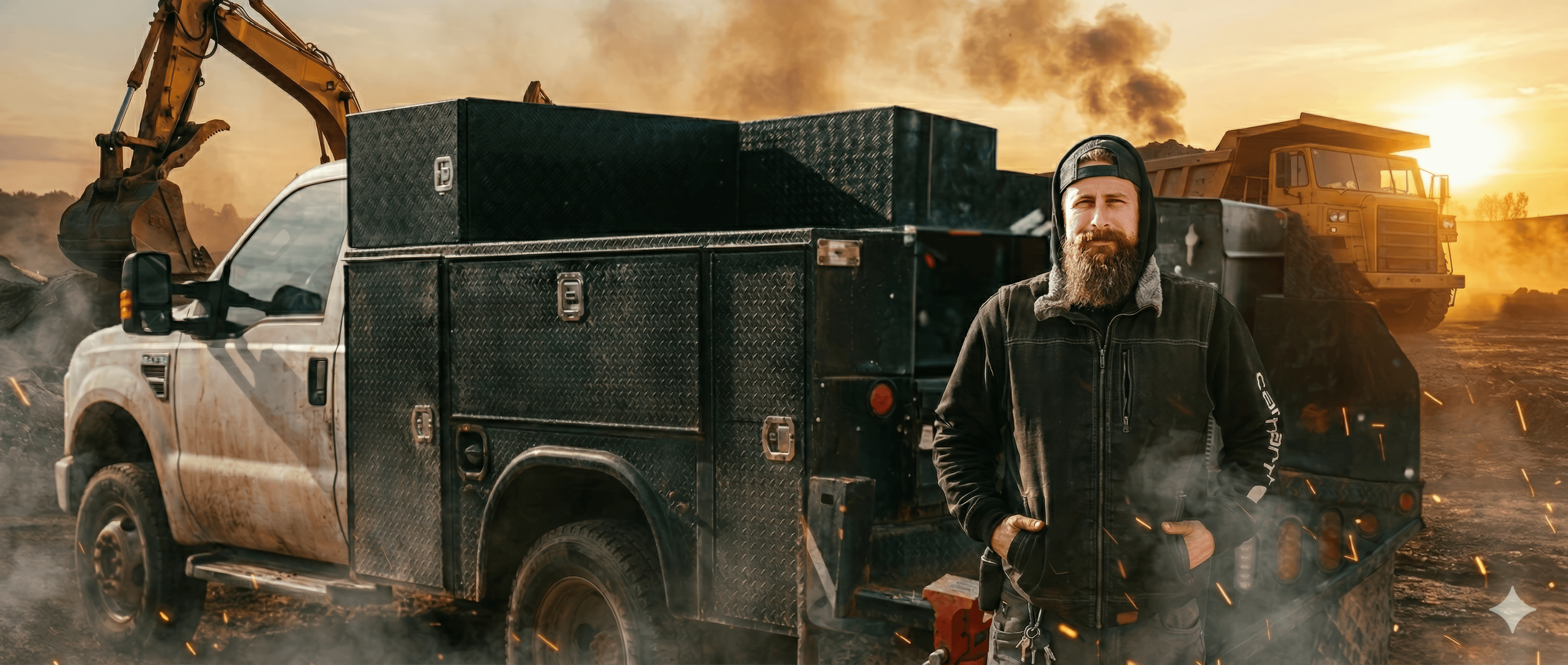
Let me tell you a story about a mistake I see contractors make almost every single week in Salt Lake and Tooele. You’ve got a machine go down—maybe it’s a Cat 336 or a loader that just won’t build pressure. Your first instinct is to call the dealer, right? They tell you their shop rate is $165 an hour, while a mobile guy like me might be closer to $190. You think, 'Hey, I'll save twenty-five bucks an hour by sending it in!' But hold your horses! You’re forgetting the lowboy bill. In Utah, getting a specialized haul for a 50,000-lb machine usually starts at $800 each way, and that’s if they’re available! I’ve seen guys sink two grand into transport before a mechanic even touches a bolt.
And it’s not just the money for the truck. It's the time! Loading a dead machine is a nightmare—I’ve spent four hours winching a 'dead stick' excavator onto a trailer in the mud, and let me tell you, it’s dangerous work. You’ve got your lead operator and a ground guy standing around helping, so you’re paying their wages too. By the time that machine hits the shop yard, you’ve already spent more than the actual repair would have cost if I had just shown up at your site with my service truck! Mobile repair brings the shop to you, crane and all, so the 'clock' only starts when we’re actually working on the problem.
I remember one job out in Herriman where a guy insisted on hauling his skid steer to a shop for a 'simple' hydraulic issue. He spent half a day loading it, half a day hauling it, and then the shop told him it would be three days before they could even look at it! If he’d called Iron Horse, I could have been there in two hours, swapped the blown hose or resealed the cylinder, and had him back in the dirt by lunch. You have to look at the 'Total Cost of the Fix,' not just the hourly rate on the invoice. When you factor in the haul, the fuel, and the manpower, the shop 'savings' evaporate pretty dang fast!
Practical tip from the field: Always ask your mechanic for a 'Travel vs. Haul' comparison. If I can fix it in the dirt for five hours of labor plus a travel fee, compare that to ten hours of your team’s time messing with trailers. 90% of the time, the mobile unit wins on the P&L statement. Plus, my service truck is basically a machine shop on wheels—I’ve got the compressors, the cranes, and the specialized diagnostics to handle major repairs right there in the dirt. Don't let the 'lower' shop rate fool you into a logistics nightmare!
The "Dealer Bay Trap" and the Shadow Cost of Idle Crews
If you want to see a project manager’s blood pressure hit the roof, just watch a crew of five guys standing around a dead dozer at 10 AM on a Tuesday! This is what I call the 'Shadow Cost' of downtime, and it’s the silent killer of construction profits in the Intermountain West. When your iron stops moving, your operators don't stop getting paid. If you’ve got a crew of five at $40 an hour, that’s $200 an hour literally going up in smoke while you wait for a shop to call you back. In a single eight-hour shift, you’ve lost $1,600 in wages alone—and that doesn't even count the lost revenue from the work not getting done!
This is where the 'Dealer Bay Trap' gets you. You haul the machine in, and they tell you it’s 'in line.' But then a bigger fleet customer comes in with a fleet of twenty machines, and suddenly your single excavator gets pushed to the back of the lot. I’ve seen machines sit for two weeks at a dealer shop waiting for a two-hour repair! If that machine is part of a critical path—like a loader feeding a crusher—your entire jobsite is paralyzed. I once saw a contractor lose a fifty-thousand-dollar completion bonus because his primary machine was stuck in 'shop limbo' for a month. He was trying to save a few bucks on labor, but he ended up losing his shirt on the schedule penalties.
When you hire Iron Horse Field Service, you’re hiring a priority response. We don't have a 'back lot' where your machine goes to die. We show up at your site, we diagnose the failure, and we get to work. My goal is to get your operator back in that seat as fast as humanly possible! I’ve been known to work through a snowstorm or stay until 9 PM just to make sure a crew can start digging at 6 AM the next morning. That’s the level of commitment you only get from a professional field service outfit. We understand that your machine isn't just metal; it's the heartbeat of your business.
Here’s a data point for you: For a mid-sized excavation crew, every hour of machine downtime usually costs between $500 and $1,200 depending on the project. If I can save you four hours of waiting, I’ve just paid for my own labor twice over! Don't let your crew become high-paid spectators. Use mobile repair to keep the iron moving and the project on track. I always tell my guys, 'The most expensive repair is the one that takes the longest to start.' If you're down, don't wait for a shop bay to open up—get a pro in a truck out there now!
On-Site Safety and the "Real World" Diagnostic Advantage
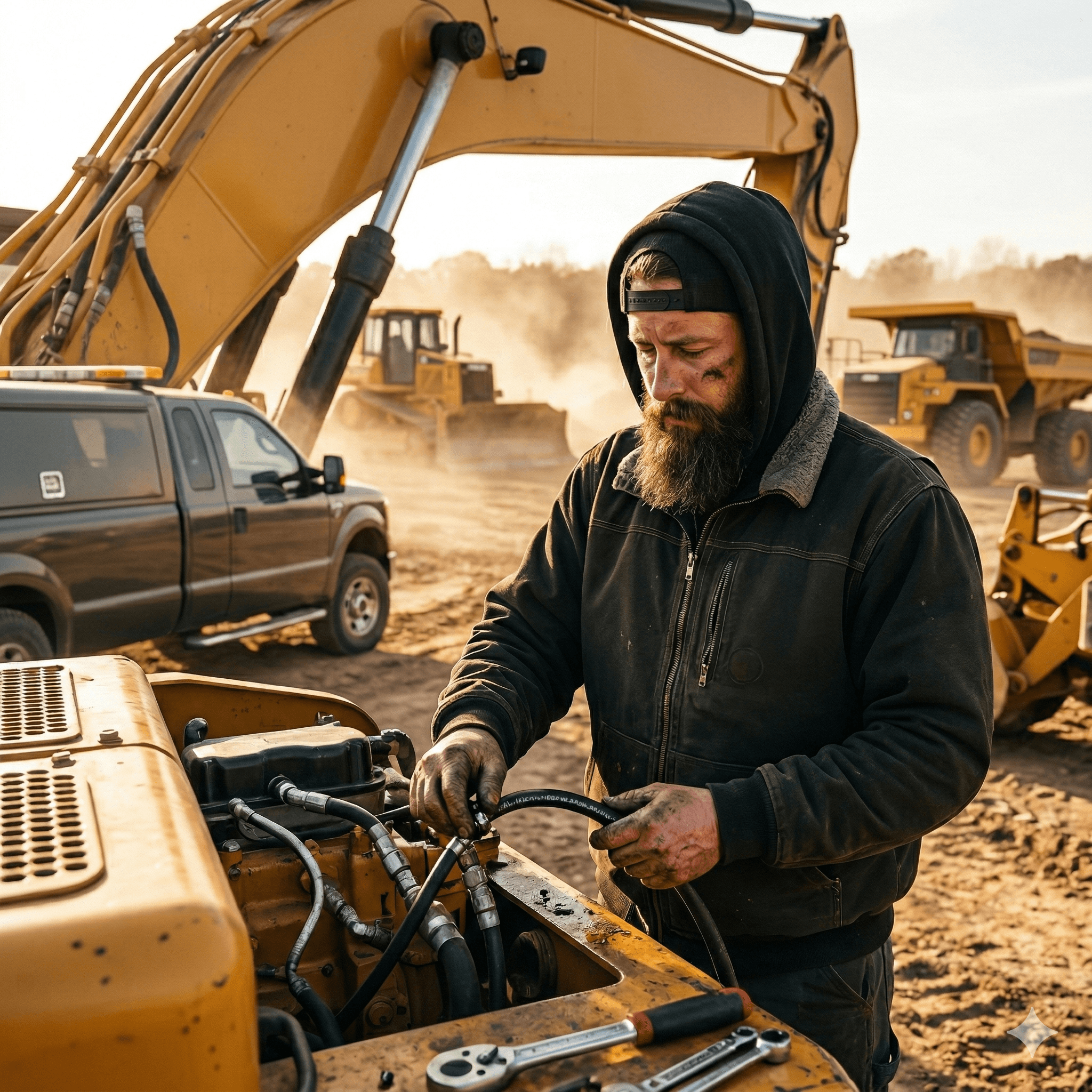
One thing people rarely talk about is the 'Diagnostic Advantage' of fixing a machine where it actually works. When you take a machine to a shop, it’s clean, it’s on a concrete floor, and it’s disconnected from the jobsite environment. But a lot of the time, the *cause* of the failure is related to the specific conditions on your site! I’ve seen machines that would work perfectly in a shop, but the moment they hit the abrasive dust of a Tooele quarry or the steep slopes of a Park City development, they’d throw a code or blow a seal. By diagnosing the machine in its 'natural habitat,' I can see exactly how it’s being operated and what environmental factors are contributing to the breakdown.
I remember one job where a guy had a recurring hydraulic overheating issue. He’d sent it to a shop three times, and they kept saying it was 'fine.' When I showed up to the site, I realized the operator was 'dogging' the engine at low RPM while trying to lift heavy loads, which was spiking the hydraulic pressure and cooking the oil. I didn't just fix the machine; I spent twenty minutes training the operator on how to use the machine’s power curve correctly. You can't get that kind of 'real world' feedback from a guy sitting in a shop five miles away! We're surgeons in the field, and we use all our senses to find the root cause—not just what the computer tells us.
Safety is another huge factor. Loading a non-running dozer onto a lowboy is one of the most dangerous things you can do on a jobsite. I’ve seen winches snap, ramps kick out, and machines slide sideways off the trailer. It’s a recipe for a disaster that could end in a massive insurance claim or worse. By performing the repair where the machine sits, we eliminate that entire risk profile. My service truck is OSHA and MSHA compliant, and we’re trained to set up a safe 'work zone' in the dirt. We respect your jobsite rules because we want everyone to go home at the end of the day.
Think about the logistics of 'fluid management' too. If I’m doing a hydraulic pump swap in the field, I’ve got specialized vacuum systems and containment gear to make sure not a drop of oil hits your jobsite soil. We take environmental protection seriously! When you haul a leaking machine, you’re often leaving a trail of oil down the highway, which is a great way to get a fat fine from the DOT. Let’s keep the mess and the risk to a minimum by handling the fix onsite. Rugged, professional, and safe—that’s the Iron Horse way of doing business!
The Strategy of "Yard Days" and Preventative Field Service

The most profitable contractors I know in the Wasatch Front don't just call me when something snaps. They schedule 'Yard Days.' This is the absolute peak of field service efficiency! We pick a day when your fleet is idle—maybe a Friday or a rainy Tuesday—and I bring my truck to your yard to service three or four machines at once. We do the oil samples, check the track tension, run the diagnostics, and catch the 'small' stuff before it becomes a 'down machine' emergency on a busy Monday morning. This spreads the travel cost across multiple units and ensures your iron is 100% ready for the next big bid.
I tell my students that 'maintenance isn't a cost; it’s an investment in uptime.' I once had a client who started doing monthly 'field audits' with us. We found a cracked swing bearing on his excavator during a routine check. It was a five-hundred-dollar welding fix that day. If he’d waited until it failed during production, he would have been looking at a fifteen-thousand-dollar structure repair and two weeks of downtime! That’s the power of having a pro look at your gear regularly. We aren't just 'parts changers'; we’re fleet advisors who want to see your business succeed.
Whether you need a quick hydraulic hose swap in Salt Lake City or a complete engine diagnostic in Park City, the efficiency of mobile service is unbeatable when you look at the total project P&L. We’ve built our reputation on being there when we say we will and doing the job right the first time. No fluff, no excuses—just rugged, professional service for the guys who build Utah.
In conclusion, the 'Shop vs. Mobile' debate usually comes down to one thing: How much is your time worth? If you’ve got plenty of time and a cheap way to haul, maybe the shop is for you. But if you’re a professional contractor with deadlines to meet and a crew to keep busy, Iron Horse Field Service is your best bet every time! We manage your repair from the initial call to the final invoice, ensuring you get the fastest possible path back to production. Give us a call today and let’s get that iron moving—I'll see you in the dirt!
Need repair help fast?
Tell us your equipment details, jobsite location, and symptoms. We’ll follow up to confirm scheduling and dispatch service.