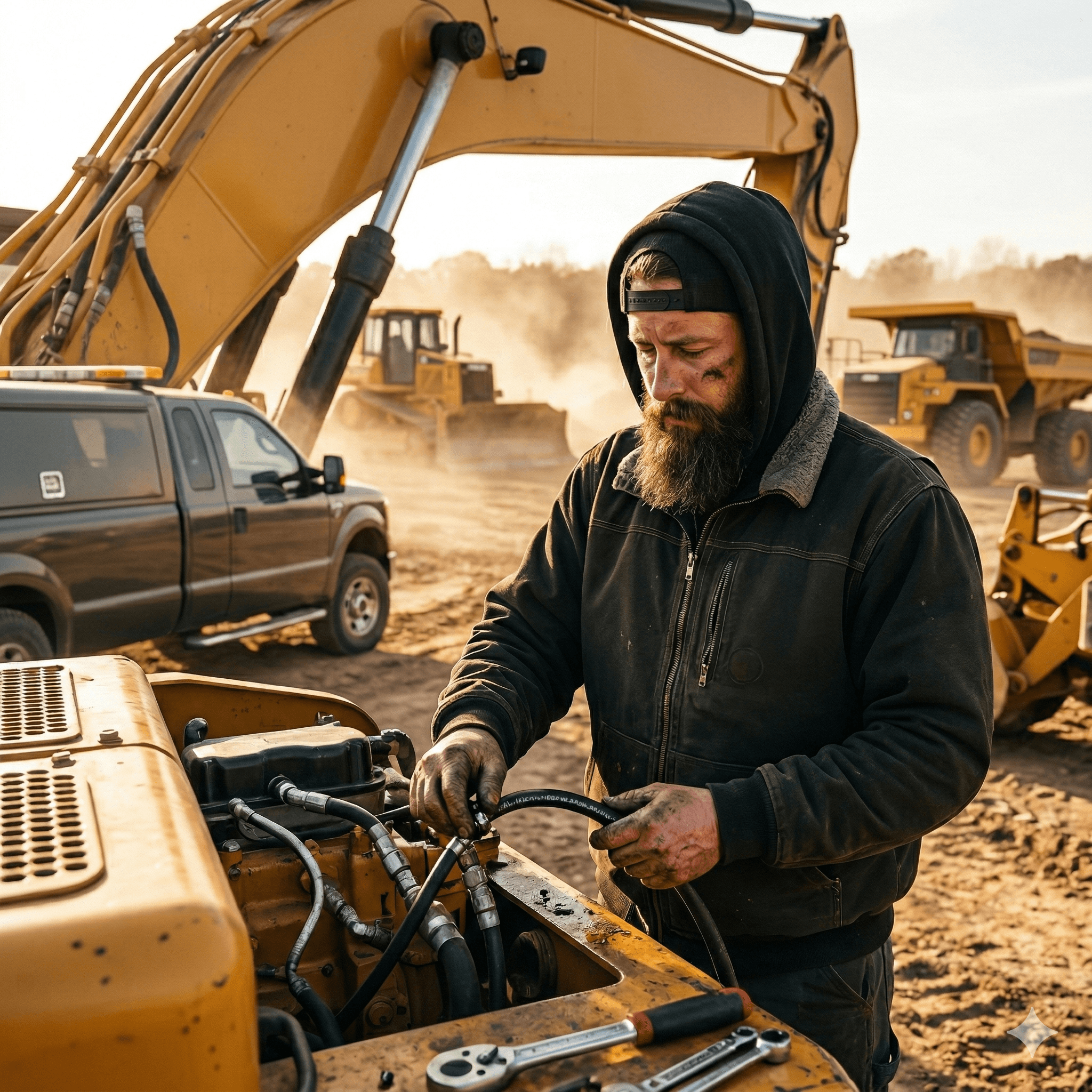
Sluggish Performance and Power Loss: Why Your Machine Feels "Lazy"
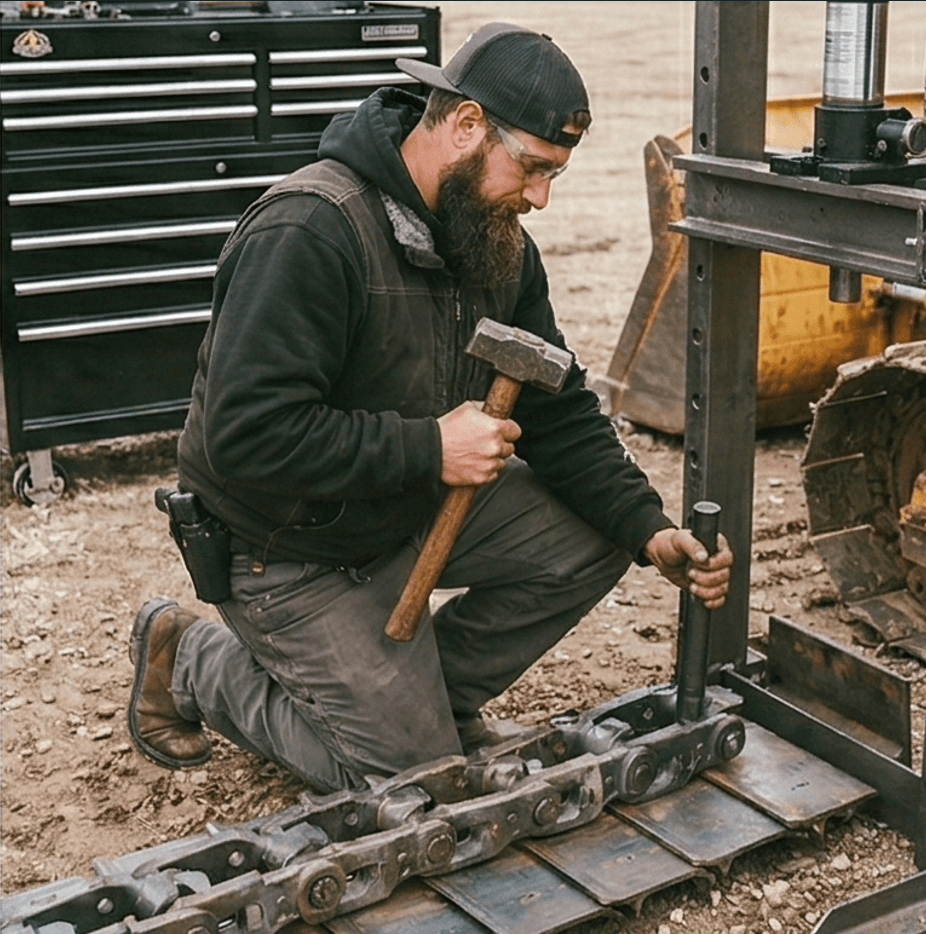
You know that feeling when you first jump in a machine on a cold morning and everything is crisp and responsive? Well, if by 2 PM your excavator feels like it’s moving through molasses, you’ve got a hydraulic problem! Sluggish performance is the #1 sign that your system is losing efficiency. I’ve seen so many operators just 'throttle up' to compensate for a lazy boom, but let me tell you, that’s just putting a Band-Aid on a bullet wound! You're creating more heat and putting more stress on an already failing pump.
In my 25 years of field service, I’ve learned that 'lazy' hydraulics usually point to one of two things: internal wear in the pump or bypass in the control valves. Think of it like a heart that’s starting to fail—it can still pump blood, but it has to work twice as hard to get the same results. In the heat of a Utah summer, when the oil thins out, these issues become glaringly obvious! If your cycle times have increased by even 10 or 15 percent, you’re already losing money on every single bucket you move. I once worked with a contractor in West Valley who was losing nearly an hour of production every day just because his main pump was worn out. Over a month, that downtime cost him more than a brand-new pump!
Practical tip from the field: Run a simple cycle time test. Check the factory specs for how fast your boom should raise and lower. If you’re more than a second or two off, it’s time to call a pro for a flow and pressure test. We bring the flow meters directly to your jobsite so we can see exactly what that pump is putting out under load. Catching internal wear early can save you from a 'catastrophic' failure that sends metal shavings through your entire system. Trust me, you do *not* want to be the guy paying for a total system flush because you ignored a lazy machine!
And don't forget about the pilot system! Sometimes the 'sluggishness' isn't the main pump at all; it’s a failing pilot pump or a restricted filter that’s not letting the main valves open fully. I’ve seen guys spend ten grand on a main pump only to find out the problem was a fifty-dollar sensor or a plugged screen. That’s why accurate diagnostics are so important! We don't just swap parts at Iron Horse; we find the truth. If your iron is feeling tired, give us a shout before it decides to take an unscheduled vacation right in the middle of a critical dig!
Strange Noises: What Banging, Whining, and Screeching Really Mean
If your machine starts making noises that sound like a bag of marbles in a blender, you need to turn it off *right now*! I’m serious! Hydraulic systems are supposed to be relatively quiet—just the hum of the engine and the 'whoosh' of the oil. When you start hearing high-pitched whining or rhythmic banging, your machine is screaming for help. I’ve seen too many guys try to 'finish the shift' when they hear a pump start to whine, and let me tell you, that extra hour of work usually ends up costing them five thousand dollars in parts!
That high-pitched whine is almost always 'cavitation.' That’s a fancy word for air bubbles forming and collapsing inside your pump. It’s like a million tiny explosions happening every second, and it eats through metal like it’s made of butter! Cavitation is usually caused by a restricted suction line or a failing inlet seal. In the dry, dusty air of Tooele or the Uintah Basin, suction leaks are incredibly common. If air gets in, your pump dies. It’s that simple. I once spent a whole day rebuilding a dozer pump that had been cavitated so badly the internal brass looked like it had been through a meat grinder.
Then there’s 'aeration'—that’s when air is getting into the oil from the return side or a bad cylinder seal. You’ll know you have aeration if your oil looks 'milky' or foamy in the sight glass. Foamy oil doesn't lubricate, and it doesn't compress! It makes your controls feel 'spongy' and can cause your cylinders to 'jump' or chatter. If you hear a banging sound when you move a lever, that’s often air trapped in the lines. It’s annoying, but it’s also dangerous! A jumping boom can easily knock a guy over or hit a trench wall.
Here’s a field secret for you: Use your ears like a stethoscope! If you hear a new noise, try to pinpoint where it’s coming from. Is it near the pump? Is it at the control valve? Knowing the 'location' of the sound can save me an hour of diagnostic time when I show up in my service truck. And for heaven’s sake, don't just turn up the radio to drown it out! That noise is your machine’s way of telling you that a total breakdown is just minutes away. Call a mobile mechanic the moment you hear something 'funny'—it’s the cheapest phone call you’ll ever make!
Excessive Heat: The Silent Killer of Seals and Additives
If you can't keep your hand on the hydraulic tank for more than a second, your system is running too hot! I call heat the 'Silent Killer' because it doesn't always make a noise or cause a visible leak—it just slowly cooks your machine from the inside out. Most hydraulic systems are designed to run between 140 and 160 degrees. Once you hit 180 or 190, your oil starts to break down, your additives disappear, and your seals start to turn into hard plastic. In Utah, where the ambient air can hit 105 in July, your cooling system has its work cut out for it!
Excessive heat is almost always a sign of an 'internal bypass.' This is when high-pressure oil is escaping through a worn seal or a misadjusted valve and returning to the tank without doing any work. All that wasted energy turns directly into heat! It’s like running your car with the brakes partially applied—everything just gets screaming hot. I’ve seen hydraulic systems get so hot they actually melted the plastic connectors on the wiring harness! If you ignore a 'hot' machine, you’re basically fast-tracking a total system failure. You’ll start blowing hoses, then your pump will seize, and then you’re looking at a massive bill.
We use some pretty cool tech to find these heat issues. At Iron Horse Field Service, we carry thermal imaging cameras on our trucks. I can point that camera at your valve bank and see exactly which spool is bypassing just by the color on the screen! It’s like having X-ray vision for hydraulics. I remember one job in Ogden where a guy had an overheating loader. Three other mechanics had told him he needed a new cooler. I showed up with my thermal camera and realized it was just a relief valve that had a tiny bit of debris holding it open. A ten-minute cleaning fix saved him from a two-thousand-dollar cooler replacement!
Practical advice: Keep your coolers clean! In the dusty Utah desert, those tiny cooling fins get plugged up with 'fuzz' and dirt in a matter of days. Blow them out with compressed air every single morning during your walkaround. If the air can't get through the cooler, the heat stays in the oil. And check your fan speed! If your hydraulic fan motor is bypassing, it won't spin fast enough to shed the heat. If you’re seeing high-temp alarms on your dash, don't just clear the code and keep working. Find the bypass, fix the restriction, and give your hydraulics a chance to breathe!
Visible "Weeping": Why Small Leaks Lead to Big Headaches
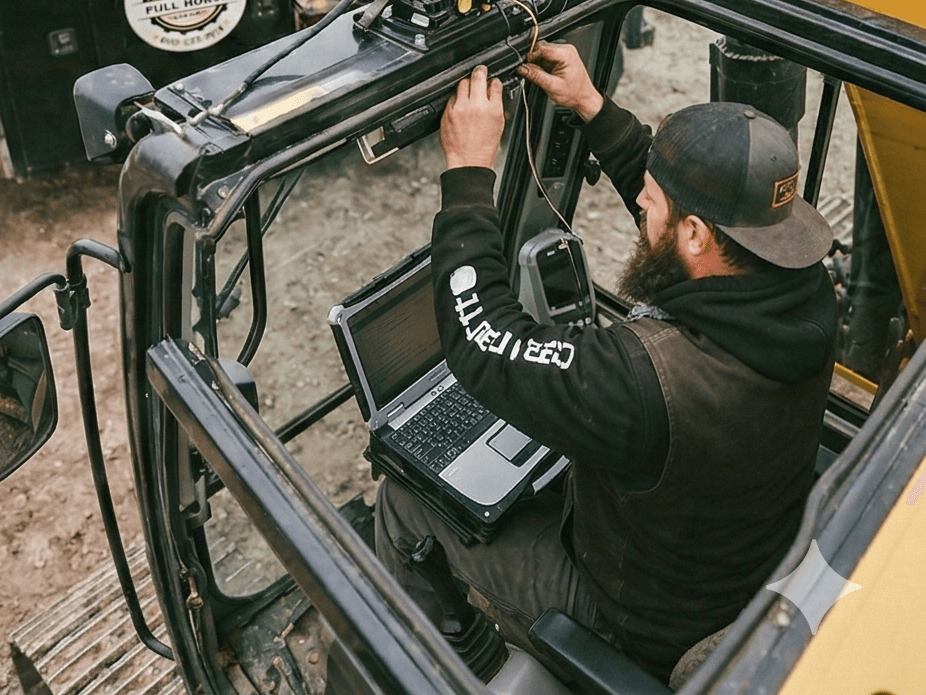
I’ve heard it a thousand times: 'It’s just a little weep, I’ll fix it when the job is done.' Well, let me tell you, a 'weep' is just a leak that hasn't found its rhythm yet! In the abrasive environment of a construction site, a damp fitting acts like a magnet for grit and dust. That grit then gets sucked past the seal and into your system every time the cylinder cycles. You’re essentially feeding your pump a diet of sandpaper! What started as a five-dollar O-ring problem can quickly turn into a five-thousand-dollar cylinder rod score. It’s a classic example of 'penny wise and pound foolish.'
Every drop of oil you see on the ground is oil that isn't doing work. But more importantly, if oil can get out, dirt and air can get in! Contamination is the #1 cause of hydraulic component failure. I once worked on an excavator in Provo where the owner had ignored a 'minor' leak on the swivel joint for six months. By the time I got there, the internal seals were gone, and the center manifold was so badly scored we had to replace the whole unit. He’d spent more on 'makeup oil' over those six months than the actual repair would have cost if he’d called me when it first started weeping!
And let’s talk about the safety and environmental side of leaks. A 'weeping' hose can turn into a 'burst' hose in a heartbeat. If that happens while a bucket is in the air, you’ve got a major safety hazard on your hands! Plus, the EPA and local Utah inspectors don't take kindly to oil spills. One burst hose can dump forty gallons of hydraulic fluid into the soil in a matter of seconds. Now you’re looking at soil remediation costs and potential fines that make a mobile mechanic’s bill look like pocket change. It’s just not worth the risk!
My advice? If it’s wet, fix it! We carry a massive array of seals, fittings, and hoses on our Iron Horse service trucks. Most 'weeps' can be fixed in thirty minutes if we catch them early. We can reseal cylinders, swap out O-ring face seals, and crimp new hoses right there in the dirt. Don't let a small leak turn into a jobsite-stopping emergency. Keep your machine dry, keep your oil clean, and your iron will stay productive for years. If you’re seeing some 'damp' spots on your gear, give us a call—we’ll get it dried up and back to work fast!
Need repair help fast?
Tell us your equipment details, jobsite location, and symptoms. We’ll follow up to confirm scheduling and dispatch service.